The meaning of life is to find your gift. The purpose of life is to give it away. – Pablo Picasso
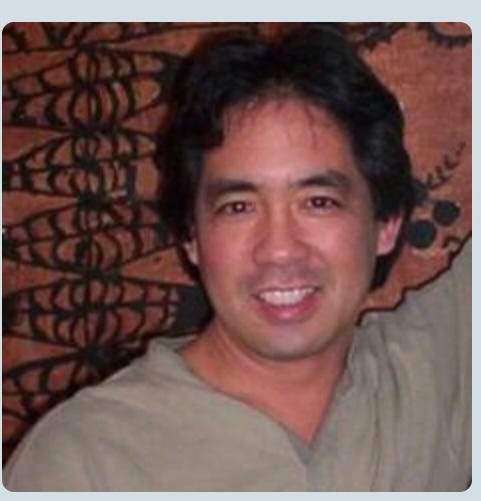
Greg called me “brother” – not because he and I socialized much, but because most of the time we spent together was in ritual space. There, anyone who could stand the heat, stay in the room and sing, laugh or weep together was either a brother or a sister. We shared these spaces for five years in our weekly men’s group, ten years at men’s retreats in Mendocino and fifteen years of poetry salons and grief rituals. Greg was a poet of the soul.
Before The Men’s Retreat (Mendocino Woodlands, 2001)
She asks: “What is it?” And I say: “100 men naked in the woods.” She wrinkles her nose and says: “No clothes?” And I say: “Sometimes.” And she says: “What do you do?” I say: First we remove the coat of corporate soldier, of worker bee, of boss, of coach, of business owner. Then we pull off the jacket of marriage. Toss aside the shoes of parenthood. The umbrella of son. The backpack of friend. The helmet of hero, savior, tough guy. We pull from our pockets the mantle of lady’s man, lover, slayer of the weaker sex. We check in our charm and toss away the pants of romance. All the roles and expectations we carry about in our lives, we leave behind like a pile of clothes on the floor.” She says: “On the floor? That’s what I thought. Then you’re naked?” Says I: “Not yet. We promise not to engage in physical violence, then we strip off unnecessary civilization. Toss it in the pile with all the rest.” She: “Then you’re naked.” I: “No. We still hold onto our tattered dysfunctions and threadbare beliefs like a 10-year old pair of bikini briefs. That’s the last thing, but we hold fast, because, you know, those stinking little lies and truths, that stained and shredded pair of underwear held our life together for 10, 20, 40 years. And only when we can toss that old thing away are we truly naked” She blinks and says: “So it’s 100 men in the woods in tattered underwear.” I say: “Yes. But over the course of the week, it washes away in the realm of ritual. Blown away by the breath of spirit. Cracked open under the scrutiny and support of men. Pried off by the power of story.” She stares at me, silent, and then: “Why? . . . Why do you do it?” I say: “So we can see what’s left. That’s us. Naked. We can hardly recognize ourselves, but that’s who we are. It’s blinding. Dazzling. Beautiful. Very painful, but very real. We walk with it. Work with it. Sing songs to honor and protect it. Wounds are revealed, healed, become our strength and our shield. Internal lands are explored, monsters are banished, and in the end, we bring some of this back into life, even as we put our clothes back on.” She shifts and settles, ponders and pads about the room, then smiles and says: “Well have a good time then.”
Greg was “a man of sorrows, acquainted with grief.” And for that reason he was full of joy. Does that sound strange? I’m reminded of a mutual friend who visited a West African village and asked a woman why she seemed so happy, despite her poverty. She responded, “Because I cry a lot.”
Greg was funny:
At Barry and Maya’s Poetry Salon
I speak to a living room full of people, touching their soul
with a poem about love and beauty and heart and desire.
It is good what I do when I do it well,
and afterwards I am proclaimed a Real Poet.
Later at break I am in the bathroom
when an old woman barges in mid-pee.
She sees me and proclaims:
“Oh! It’s okay to interrupt a poet while he pees!”
As if a poet’s willingness to live in the heart’s vulnerability
also includes willingness to live in urinary vulnerability.
I need to process her words before my sphincter,
now tight as a lug nut leaving the Firestone Tire Center,
relaxes enough to release the contents of my bladder.
“Yeah”, I grunt, over my shoulder, “no problem”.
I wonder what else can be interrupted because
someone thinks I’m a poet.
I try to relax, try to pee powerfully and proudly
in the presence of an eighty year old poetry fan,
but the stream spurts and sputters, lurches and lags
like a dying ‘76 Oldsmobile.
I should be above this, but I am unable to not judge
my urinary performance.
She finally leaves and I finally finish.
My poetry mentor Luis Rodriguez
never said anything about this.
He should, I think.
He should.
Greg was rock solid. At our grief rituals he would always volunteer to be one of the drummers. And that’s no simple or easy thing. It means to maintain the beat for up to two hours, to hold the container while others release their pent-up feelings in the sacred work of grief. It’s one of the countless ways in which Greg served the beauty and the terror of this world. His poem American Funeral expresses his thoughts on our characteristic unwillingness to grieve:
He sits in a raft in a river with no water
that winds through sandstone canyons and green valleys
before passing through the seven gates of heaven.
The old raft, a sunken coat of flesh that
once ripped up huge chunks of Stanford Stadium turf
at left tackle, class of 1949,
that once built tuna fish sandwiches for church youth groups,
that made sloppy wet love to an appreciative wife,
now lays boxed in the ground,
but he sits alone in the raft waiting.
Waters that could’ve carried him down the river
lie locked inside Protestant bodies maintaining
an unfortunate sense of dignity, decorum, and strength.
Oceans of roiling grief sit in the pews requiring release,
but we have forgotten how to do this.
In the old days,
we knew how to prepare and anoint
the old raft for its journey.
Knew how to create the rituals
that released the sacred storms that sent him on his way.
And as much as he needed our tears we needed to weep.
But today our grief lies entombed in our bodies
and we carry them out into the world
where it comes out later in ways
not so elegant or beautiful or as necessary as tears,
and he sits in raft in a river with no water.
His book Cargo, Poems by Greg Kimura is still available. As a creative writer, he was deeply committed to “education”, which means etymologically “to lead forth what is already within someone”. If enough of us were to hear what calls to us and gave our gifts to the world, what wonders would ensue?
Greg dedicated Cargo to the African teacher Malidoma Some’, who’d taught us both for years at Mendocino. The belief that we all are born with unique gifts that must be expressed for the good of the world is essential to indigenous people everywhere. I extrapolate this idea in Chapter One of my book Madness at the Gates of the City: The Myth of American Innocence.
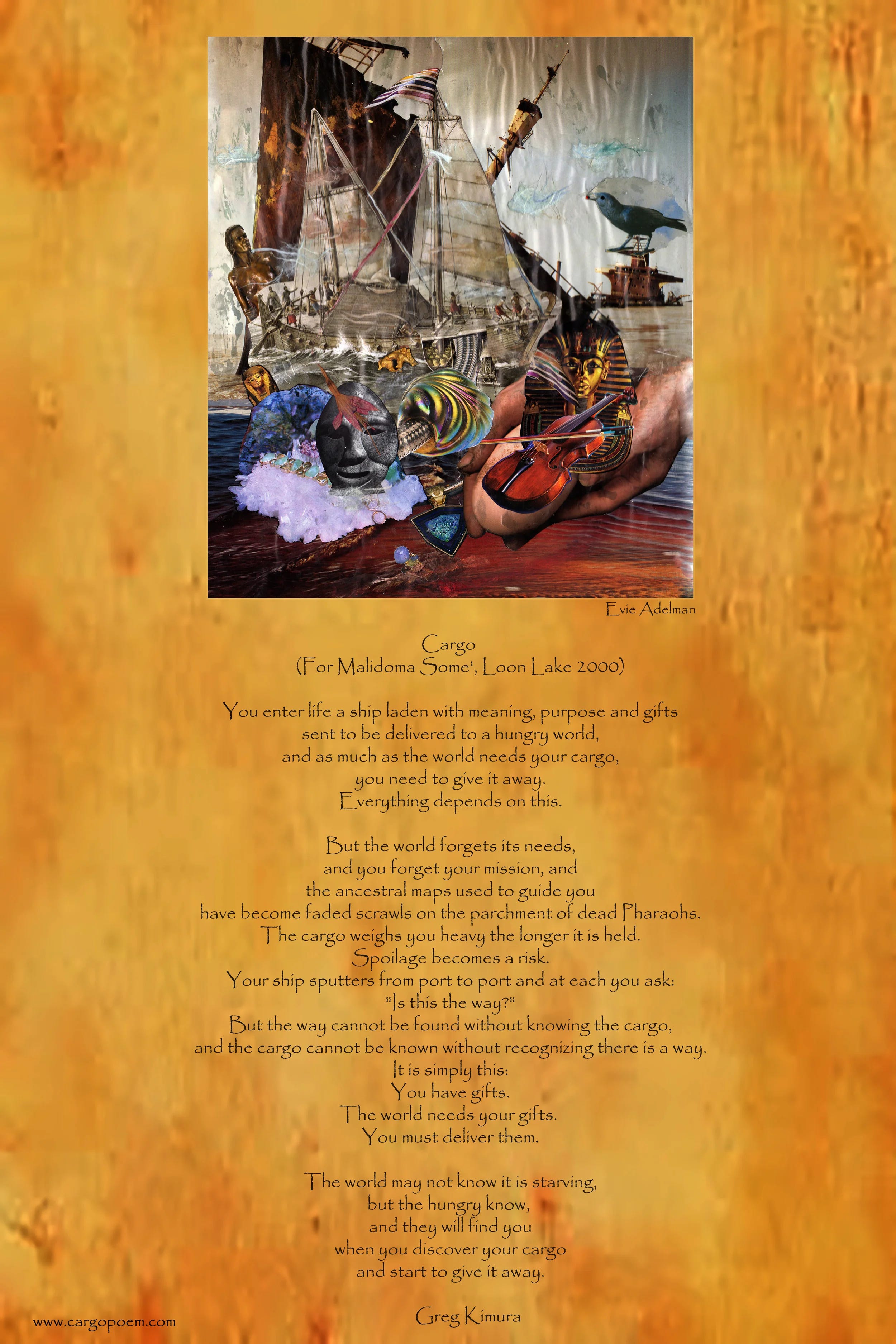
Cargo expressed that truth and went viral online for a while:
You enter life a ship laden with meaning, purpose and gifts sent to be delivered to a hungry world. And as much as the world needs your cargo, you need to give it away. Everything depends on this.
But the world forgets its needs, and you forget your mission, and the ancestral maps used to guide you have become faded scrawls on the parchment of dead Pharaohs. The cargo weighs you heavy the longer it is held and spoilage becomes a risk. The ship sputters from port to port and at each you ask: “Is this the way?” But the way cannot be found without knowing the cargo, and the cargo cannot be known without recognizing there is a way, and it is simply this: You have gifts. The world needs your gifts. You must deliver them.
The world may not know it is starving, but the hungry know, and they will find you when you discover your cargo and start to give it away.
Our mutual friends Alan Cohen and Evie Edelman created a poster of the poem to be placed, some day, in every classroom. It’s available for free here.
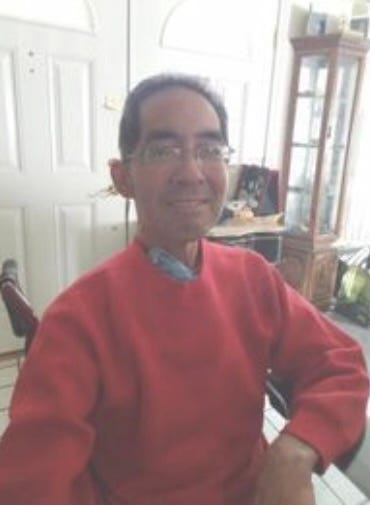
Diagnosed with inoperable brain cancer, he maintained a humor that was inseparable from both his pain and his compassion. His Caring Bridge website said, “Hi. I’m Greg and I’m dying. And so are you!” Alan wrote:
As Greg’s body faded, he stayed present, receiving and generating love. I never heard a complaint. Only gratitude and appreciation for every moment. Long term memories were evanescent wisps of smoke, and then even short term ones became wobbly. But he reveled to be here and now, time a string of forever moments to be savored then gracefully released.
But he could still remember poems. Greg had done much difficult interior work, and so (depending on your point of view) he was a real Christian, a real Buddhist and/or a real Pagan. Perhaps I’m idealizing here – the family knows far better than I – but it seemed that he achieved a profound sense of peace with his own time on this Earth, an ability to be in the moment. One of his last poems was this little gem:
Resist the World’s Numbness
And your passion revive,
so when death comes to find you,
Iet him find you alive.
He was lucky in those last months to be surrounded by so much love, appreciation and music, and everyone who visited him also felt lucky, if struck with a terrible loss. On my last visit I asked him, “How are you doing?” he responded without a trace of irony, “Couldn’t be better!”
So finally, Greg was a teacher. We recited some favorite poems together, including this one of his, a spontaneous Zen koan that I’ll be working with for a long time.
Sacred Wine
Sit with the pain in your heart, he said.
Hold it like a sacred wine in a golden cup.
The wine may break you and if it does, let it.
To be human is to be broken,
and only from brokenness can one be healed.
The ancestors say: the world is full of pain,
and each is allotted a portion.
If you do not carry your share, then others are forced to carry it for you,
And the suffering you bring to the world is your sin,
But the suffering you bring to yourself will be your hell.
Sit with the pain in your heart, he said.
Hold it there like a sacred wine in a golden cup.
When we got to the third from the last line, he interrupted me:
…the suffering you bring to yourself will be your salvation.
Thank you so much, older brother that I never had! Such a ripe sense of who Greg was! I honor the stripping away that you brothers offer each other for authentic emergence as your true self. At least that’s how I think of it.
I also miss Greg, although I did not know him as you did. I will always feel the precious golden magic when I re-encounter that Cargo call to service/love ❤️🔥

Thank you so much, older brother that I never had! Such a ripe sense of who Greg was! I honor the stripping away that you brothers offer each other for authentic emergence as your true self. At least that’s how I think of it.
I also miss Greg, although I did not know him as you did. I will always feel the precious golden magic when I re-encounter that Cargo call to service/love ❤️🔥