Blaming the Victim
Our contempt for the poor is rooted in religion

Part One
The fault, dear Brutus, is not in our stars, but in ourselves, that we are underlings. – Shakespeare
It’s your fault your faith healing failed. – Pat Robertson
In 2014, long before the economic collapse of 2020 and the mad insecurity of 2025, a friend forwarded this BBC News article: “American Dream Breeds Shame and Blame for Job Seekers”, which cited statistics claiming that 10.5 million Americans were unemployed. But in practical terms she was quite inaccurate. This was merely the number of people who were actively collecting weekly unemployment compensation checks. If we were to add in those who wanted full-time employment but could only find part-time work (including those working more than one job) and those who had given up looking for work – the actual figure was easily twice that amount (and far higher for people of color). I was reminded of the old joke: What do you mean there are no jobs? I have three of them!
Why had so many Americans given up looking for work? The article continued:
Experts tell the BBC that job seekers in the US are now, more than ever, blaming themselves for being out of work…A study published in the Journal of Personality and Social Psychology last year found that the higher people perceived their social class to be, the more likely they were to believe that success comes to those who most deserve it…(but) Perhaps more tellingly, those of lower status were viewed as unworthy.
Another researcher quoted in the article compared unemployed Israelis with unemployed Americans:
Even though Israeli job seekers faced the same relative obstacles to finding work, they saw the down economy and a lack of jobs as an arbitrary, “screwed up” system…Israelis believed that if they kept up the hunt, eventually their number would come up…But not Americans. They experi-enced a “more insidious and deep kind of discouragement” in which lost job opportunities were personal failures…And because they thought it was their fault, they were more likely to stop trying.
He might as well have compared Americans to workers in any other country. Americans are truly exceptional in this regard. However, neither the author nor any of the social scientists he quoted realized that this is, at bottom, a mythological and a theological issue.
America’s dual heritage of Puritanism and individualism retains two exceptional beliefs about personal responsibility. The first is the preposterous and demonstrably false idea that the rich succeed without government help, that successful people pull themselves up by their own bootstraps. The second is that poverty is one’s own fault. Most of our media gatekeepers have passively assumed this brutal idea as truth, even if the more superficial, liberal philosophy of equality prevents them from trumpeting it. Others, less shameful, have felt no such restraints.
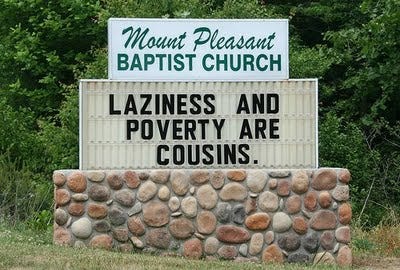
Back in Ronald Reagan’s 1980s, Jerry Falwell, one of America’s best-known preachers, scolded the poor (while still soliciting their donations) with this essential American statement: “This is America. If you’re not a winner, it’s your own fault.” In 2011, Herman Caine, who would briefly be the Republican presidential front-runner in 2016, said: “Don’t blame Wall Street, don’t blame the big banks. If you don’t have a job, and you’re not rich, blame yourself.”
Before you go hating Republicans and think that Democrats (or at least the corporate lobbyists who control the party) are fundamentally different, please consider that this is not a Republican / Democrat issue. To believe so is to fall into the liberal version of the myth of American innocence. Almost our entire national political class of pundits, preachers, academics and politicians – almost anyone in real power – has shown their willingness to manipulate this situation. It was Bill Clinton (supremely popular, God knows why, among African Americans) who bragged about ending “welfare as we know it” in 1996.
In a world of outsourced jobs, corporate control of media and AI algorithms that determine most of what we see online, we ask, where do they get this nonsense? The source of these problems is deeper than mere cynicism and opportunism, and more fundamental to our mythology, which expresses itself through our psychology. Studies indicate that wealthy people in general are less empathetic than individuals who have lower incomes, who are better at reading people’s emotions.
I’m suggesting that wealthy Americans have less empathy because they believe (despite all evidence) that they deserve their privileges because, well, they are by nature more deserving. Indeed, one of the core characteristics of sociopaths (many of whom have risen to become our richest men) is the lack of empathy. And those who aspire to reaching that status seem to intuitively understand this:
I can’t stand the word empathy, actually. I think empathy is a made-up, new age term...it does a lot of damage. – Charlie Kirk
And long ago their Social Darwinism became surprisingly popular even among the non-affluent. Here is the real problem: unlike the working classes almost everywhere else, the poor in America seem to believe this thinking nearly as much as the rich do. A 2017 poll found that 52% of practicing Christians strongly agree that the Bible teaches “God helps those who help themselves”. A previous poll in 2010 found that 75% thought that the phrase is in the Bible.
In Chapter Nine of my book Madness at the Gates of the City: The Myth of American Innocence, I write:
...the ultimate American statement was made by Ben Franklin, not Jesus: “God helps those who help themselves.”…(even) Prior to the economic meltdown of 2008, four million children were suffering merely because they were living with unemployed parents. Yet six out of seven of us believe that people fail because of their own shortcomings, not because of social conditions.
I haven’t seen any relevant statistics about this kind of thinking since the pandemic began, but given that some 70,000 Americans per year were already killing themselves by overdosing on opioids, I doubt if it has changed much.
Here is an essential American truth: since both our economics and our politics have a profoundly religious underpinning, it follows that our entire history does also. Five hundred years after Martin Luther, we still hold to a thinly veiled and reframed philosophy of Calvinist predestination. And the fact that we rarely examine this idea indicates how we take it, like all mythological assumptions, for granted.
At the very core of our national mythology is the belief that the vast differences in income and security between the rich and the poor exist not because of a profoundly inequitable, man-made system – capitalism – but because of each individual’s merit or lack of it. Uniquely in all the world, we still believe that wealth and the sense of entitlement that comes with it remains an indication of being in God’s good graces, and poverty is the sign of one’s own state of damnation. Only in America do millions of people subscribe to the theology we call the “prosperity gospel.”
America has long enshrined a form of dualistic, “either-or” thinking that ignores the complicated and tragic nuances of history. Everything that a white, male American learns from early childhood is sum-med up here: his destiny is to become a hero – a productive, creative, forward-thinking, radically independent winner in the game of life, if he plays it well, competing on what believers insist on calling a “level playing field”. And he also learns, in a thousand subtle ways, that in such a zero-sum world, the only alternative to being a success (mythologically, a hero) is to be a loser.
This belief carries the power of myth because we subscribe to it without ever examining its contradictions. It is one of the characteristics of what I call the Paranoid Imagination. As I write in Chapter Seven, the paranoid imagination combines eternal vigilance, constant anxiety, obsessive voyeurism, creative sadism, contempt for the erotic and an impenetrable wall of innocence.
Part Two
The main difference is that the enlightened believe that the poor criminal should be rehabilitated while the righteous believe that the immoral criminal should be locked up in jail. Since almost the only available system of rehabilitation in America is to be locked up in jail, the difference remains highly abstract. – William Ryan, Blaming The Victim, 1970
Deep below the sunny, optimistic, forward-looking, innocent American character is a much darker, more pessimistic view of things, and of ourselves. Psychologist David Feldman writes:
The tendency to blame the victim may be programmed into the human mind at a very basic level ...(it) may originate, paradoxically, in a deep need to believe that the world is a good and just place...that good things happen to good people, and that we, fortunately, are good people...Our positive beliefs help us to function and live happily in a world that can often be downright frightening...When bad things happen to someone who seems a lot like us, this threatens our belief that the world is a just place. If that person could fall victim to rape, assault, robbery, or attack, perhaps we could, too. So, to comfort ourselves in the face of this troubling realization and maintain our rosy worldview, we psychologically separate ourselves from the victim. We wonder if he or she had done something to invite the tragedy...
The Prosperity Gospel instructs us that God wants us to be rich and healthy, that all we need to do is want it enough and ask his help enough – and that, if we don’t, then it is our own fault if we don’t get rich or healed. Much of New Age thinking, with its emphasis on the “law of attraction”, does the same thing. However, wrote Susan Sontag:
When illness is interpreted as, basically, a psychological event…people are encouraged to believe that they get sick because they (unconsciously) want to, and that they can cure themselves by the mobilization of will, that they can choose not to die of the disease…Psychological theories of illness are a powerful means of placing the blame on the ill. Patients who are instructed that they have, unwittingly, caused their disease are also being made to feel that they have deserved it.
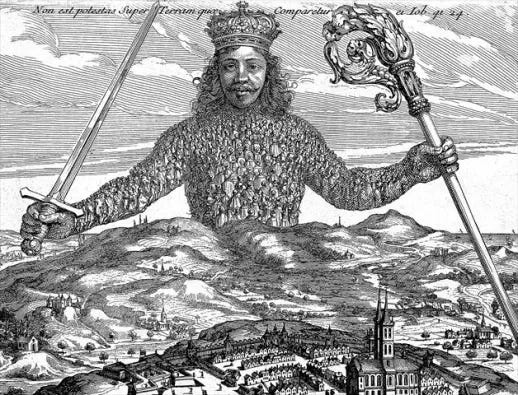
Perhaps victim blaming is a universal phenomenon, but psychologizing can also be a way of detaching ourselves from deeper issues. Our specifically American contempt for the poor (as seen in our low expenditures for welfare, compared to most other countries) is rooted in religion. Large numbers of evangelicals, born-again or not, to the extent that they see themselves as “sinners”, saved or not, really do believe that the world is dangerous and unfair, and that we are not good people. Indeed, the essence of conservative social philosophy (despite its superficial emphasis on freedom) is that we live in a Hobbesian world in which life is “solitary, poor, nasty, brutish and short,” and that the only way to secure civil society is through universal submission to the absolute authority of a central government.
And the essence of both the proselytizing mind (which would convert non-believers) and the crusading mind (which would eliminate them entirely) is the projection of that inner sense of sinfulness out into the world and onto the “others” of the world. As the poet William Stafford wrote,
The saddest are those not right in their lives
who are acting to make things right for others:
they act only from the self—
and that self will never be right:
no luck, no help, no wisdom.
John Calvin, flourishing two generations before Hobbes, was Puritanism’s primary theoretician. He put a new emphasis on the old doctrine of predestination that goes all the way back to St. Augustine.
In his theology, one that that only the rich could wholeheartedly approve of, the unknowable, transcendent deity had decreed long before that a tiny minority – the elect – were already saved, had been saved from the beginning. The vast majority would never rise above their sinful nature. One was either in a state of grace or not. “Therefore,” wrote Martin Luther, “We…deny free will altogether.” America’s foundation myth has enshrined these Pilgrims and Puritans as the first to settle the barren wilderness, even though other English settlers had arrived earlier (and Spaniards, of course, had arrived far earlier). These people put a fundamental – and fundamentalist – stamp on American consciousness: human nature was utterly corrupt, and the only escape was through grace, something they claimed to possess.
However, since they could never be certain of salvation, they experienced a constant anxiety that had been previously unknown in Catholicism. So they found an ingenious solution: to work unceasingly, hoping that grace would show itself through the results of the work ethic. Calvinism replaced the external order of the church with a far stricter internal order. Never in history had so many people willingly imposed such restraints on themselves. Medieval Catholic peasants had created festivities as an escape from work, wrote Barbara Ehrenreich, but “…the Puritan embraced work as an escape from terror.” Some believed in preparing for the conversion experience that might be greater proof of their salvation, but only after utterly debasing their sense of self-worth. They were at war with the self yet unable to escape it.
One of their few respites from the weight of this anxiety was to project their sense of guilt onto others. So, they effectively defined loss of self-control – the inability to defer gratification – as the basis for all other sins, and their answer to the perceived disorder in the world was unrelenting discipline. Once converted, they turned their critical energies (formerly directed upon themselves) into converting sinners – and failing in that attempt, to eliminate them. Others believed in free will but still emphasized individual responsibility. Either way, all worked relentlessly to prove one’s state of grace and make a fallen world more holy.
Wealth distracted from life’s only purpose – glorifying God. If, however, one felt called to prove one’s state of salvation by acquiring wealth, such activity was acceptable – but only if one didn’t enjoy it. Here is the essential Puritan contradiction: work hard, get rich, spend little, be pious. Rest would come only in the next world, and waste of time was sinful. A hundred years later, Franklin advised his readers to become what we now call workaholics: “Be always ashamed to catch thyself idle.”
This is not old history. It is critically important for us in the 21st century to realize how profoundly these ideas still influence our attitudes toward wealth and poverty (as well as to sensuality and alternative expressions of gender). The strictly religious justifications have faded away, except among Southern fundamentalists, but the core of the ideas remains as strong in our national character as ever before.
Over time, wealth became a sign of grace, while poverty – for the first time – now indicated moral failure. Poor people were damned by their own nature. Furthermore, the rich were now justified in feeling only scorn for them. Since they were lazy and sinful, or they wouldn’t be poor (or enslaved), to be charitable toward them merely encouraged idleness. It was a waste. Two hundred years later, Henry Ward Beecher wrote, “God has intended the great to be great and the little to be little.” Ministers commonly preached, “It is your duty to get rich,” and “To sympathize with a man whom God has punished for his sins…is to do wrong.”
Capitalism’s relentless logic eventually transformed this austere religious impulse into the secular concept of conspicuous consumption. After the Civil War, it allowed a few men to accumulate incon-ceivably vast fortunes. As I write in We Like to Watch: Being There with Trump, these “Robber Barons” were the first Americans to give themselves permission to flaunt their wealth. A hundred years later, James Baldwin cursed Ronald Reagan:
What I really found unspeakable about the man was his contempt, his brutal contempt for the poor.
Victim blaming, of course, is not the only consistent theme in Western religion. Father Gregory Boyle reminds us that “There are two hundred references in Scripture that ask us to take special care of the poor”. The greatest mystery within the history of Christianity is how it began with a poor carpenter who ministered to the downtrodden and ended with the Prosperity Gospel and Christian nationalism.
Reagan and others like him seemed to truly believe that their Midwestern good fortune had resulted exclusively from their talents and hard work – and not from the post-colonial, genocidal expansion that had cleared that part of the country of its indigenous inhabitants, worked it with slave labor, given it free to their grandparents in the Homesteading Acts of the late 19th century and subsidized them with New Deal programs in the 1930s. He truly seemed to have no idea what white privilege means. But he did know, or believe, that the poor had only themselves to blame.
Over three centuries, Americans gradually shifted from being producers to being consumers. They began by enshrining gain without pleasure and ended with the worship of celebrities and addiction to “stuff.” But below the surface, work still equals salvation. It has been said that Europeans work to live, while Americans live to work. Journalist Lewis Lapham, however, argued that they misunderstand us:
...material objects serve as testimonials to the desired states of immateriality – not what the money buys but what the money says about our…standing in the company of the saved.
Why are so many of us obsessed with being saved? We can’t understand the American character without considering this question. In Chapter Ten, I argue that in exchange for belief, evangelical religion offers quick, divine forgiveness and a return to innocence, the Garden before Eve. In Heaven, quipped Native American writer Vine Deloria, we receive “imperishable bodies in which (we) can do exactly the same things that were punishable offenses in the present life.”
But Depth psychology argues that anything other than self-forgiveness simply reinforces one’s core identity. For most, conversion cannot deliver the innocence it promises. The “saved” person gives his corrupt nature to God, but without doing the long, hard work of grief and introspection, what D.H. Law-rence called “…patience, and a certain difficult repentance.” Language is critical to the unconscious mind. Even after conversion, he often continues to refer to himself as a sinner. Remaining convinced at heart of his unworthiness, he must remove the truth from awareness. His legitimate spiritual longings calcify into fanaticism, which, as Jung wrote, “is always a sign of repressed doubt.”
But since the energy, the sense of sin, must go somewhere, he must project it onto others. Able to see his own darkness only in other persons, he is compelled to proselytize. If he can convert the other to believe as he does, then the enormous weight of shame may be lifted, but only briefly. As in any other addiction, he must repeat the projections and continue proselytizing. On a psychological level, he is, after all, speaking into a mirror, trying to convince himself. “The lady doth protest too much, methinks”, says Shakespeare.
In the extreme, if he cannot convert, then he must eradicate any expression of heresy (from the Greek: “able to choose”). And we shouldn’t feel superior. Since all modern people share this monotheistic consciousness to some degree, wrote James Hillman, we are all “psychologically Christian.”
Part Three
When men oppress their fellow men, the oppressor ever finds, in the character of the oppressed, a full justification for his oppression. – Frederick Douglas
In 2025, following the pandemic, the collapse of the economy, racial violence, the elections (see my essays, “A Mythologist Looks at the 2020 Election” and “A Mythologist Looks at the Election of 2024”) ICE raids, firings of progressive academics and natural disasters on our minds, not to mention Trumpus’ encroaching fascism, it’s easy to ignore the U.S.’s post-World War Two foreign policies. But when we bring them to the forefront, we encounter statistics that remind us of the astonishing and heartbreaking 75 years of waste and cruelty, including the bombing of some forty countries. Now, and for several decades, the U.S. military budget has amounted to two-thirds of the nation’s discretionary budget, half the world’s military budget, greater than the next ten countries combined.
Such estimates, by the way, are very conservative. When all indirect aspects of military spending are added in, including nuclear weapons programs, the Departments of State, Veterans Affairs and Homeland Security, anti-terrorism programs, foreign military assistance (most of which goes to Israel and Egypt) and interest on the national debt (mostly paying for past wars), the true cost of the American empire, supported equally by Democrats and republicans, is well over a trillion dollars per year.
And we may be forced to conclude that much of our domestic political drama is really a distraction from this much larger moral tragedy. When liberal presidential candidates dismisses Medicare For All with “Nice idea, but how are you going to pay for it?” they are deliberately avoiding this elephant in the living room, and assuming, rightly, that the mainstream media will as well.
Our beliefs about wealth and poverty are the absolute foundations of our domestic issues. But the same thinking has undergirded our foreign policies – and the public’s acquiescence to them – since the very beginning. This is how white Americans have always resolved the contradiction of living in a society that raises freedom and equality to the highest values while simultaneously murdering millions and con-suming vast amounts of the Earth’s resources. From the Indian wars and the Mexican War to Syria, Iraq, Afghanistan and Gaza, to whatever “October surprise” madness happens before each election, it has always been composed of a series of seven basic principles:
1 – Americans are good, pure and innocent, and we always come to help those in need.
2 – We become violent only when we are provoked, or to defend freedom.
3 – We are divinely entitled to kill, enslave and steal the resources of other people.
4 – We can justify these crimes because those people are evil. They, the victims, are to blame.
5 – It follows that they must have acted – or intended – to attack us. We are the actual victims.
6 – Therefore, we are justified in having attacked them, and we are not accountable.
7 – Ultimately, we do it for their own good.
Chapters Seven and Eight of my book explain how the mythic narratives grew about “a people without land” who settled a “land without people” in the name of freedom, and how a collection of radical indivi-dualists became a nation with a unified, divine mandate. Since those times, Americans have been “coming to help” in countless places – whether asked to or not. And always, as the missionaries to Hawaii were described, many of those who come to do good end up doing quite well for themselves. This is the particularly American genesis of empire.
Skeptics will argue that in this regard the American empire is not exceptional. Indeed, apologists for other empires such as the British have often strayed into this territory. The Nazis claimed that Poland had provoked them into defending themselves (by invading Poland). Chroniclers of the medieval Crusades justified their pillaging of Muslim lands (and destroying Jewish communities on the way) with talk of a divine call and pure motivation. But such language fell most easily upon white, Anglo-Saxon American ears because by the second half of the 19th century, we already had a 200-year legacy of taking the belief in our good intentions for granted.
At that time, American intellectuals (and only in America) twisted Darwin’s idea of natural selection into Social Darwinism by falling back upon Puritan justifications for wealth and poverty and asserting that America’s good fortune, like the wealth of its ruling classes, proved its virtue.
Exploitation and elimination of the weak, they claimed, were natural processes; and competition pro-duced the survival of the fittest. The next step was to infer that only the affluent were worthy of survival. These people were, of course, merely restating the Calvinist view of poverty as a condition of the spirit. Life was a harsh, unsatisfying prelude to the afterlife, redeemable only through discipline. Deeply religious and idealistic people passionately argued that the suffering of the poor was a good thing because it provoked remorse and repentance, and that political movements to relieve their condition were unnatural. Secular apologists, meanwhile, simply substituted the word “nature” for “God.” In 1902, John D. Rockefeller, the richest man in the world, addressed a Sunday school:
The growth of a large business is merely a survival of the fittest...The American Beauty rose can be produced in the splendor and fragrance which bring cheer to its beholder only by sacrificing the early buds which grow up around it. This is not an evil tendency in business. It is merely the working-out of a law of nature and a law of God.
This is often considered a phenomenon of the 19th century. To think of it as such, however, is to deny the mythic thinking that has lost none of its power in the 21st century. How else would we understand this 2021 headline:
Wisconsin school district opts out of free meal program to avoid ‘spoiling’ hungry children.
Social Darwinism was one of the primary justifications for colonialism, at least for the late 19th-century American ruling class. These people apparently believed that the intense and unrelenting competition for survival had produced a new human type, the Anglo-Saxon, who alone had the moral sense to accept the White Man’s burden. Such men were uniquely qualified to help civilize those who couldn’t improve themselves without the prolonged tutelage of enlightened colonial rule. To see how generations of white intellectuals have justified this nonsense, see The History of White People, by Nell Irvin Painter. These notions, tempered with superficially idealistic verbiage, have remained at the core of America’s foreign policy right up to the present, because they express the essence of our mythic narratives.
When Trumpus decides that it is in his personal interest to invade Venezuela, he will justify his actions by resorting to this essentially mythological language, in this case that a “narco-terrorist” invasion is immanent. But Trumpus-haters will need to understand that, despite his crude and racist language, his actions will be in complete alignment with all recent administrations. As Noam Chomsky has said,
“If the Nuremberg laws were applied, then every post-war American president would have been hanged.”
But when Social Darwinism confronts American idealism and the notions of freedom and equality, it evokes a profound discomfort that mirrors the anxiety at the core of Puritanism: How can I really know if I am among the elect? If the Other actually has the same rights, skills and privileges that I have and the Other is evil, what does that make me? It should be no surprise that the issues of gay marriage, immigration and reparations for slavery have provoked such vicious reactions in our time.
When social change periodically creates threats to our sense of identity, as it did after the Civil War and during each of our regular economic crises, white Americans typically coalesce around our most core principles and attitudes. We fall back upon the tried-and-true notions of knowing who we, as we would like to think of ourselves, but negatively: in terms of the Other. We are not the Other.
But the unapologetic rants about entitlement and poverty of charlatans such as Jerry Falwell and clowns like Herman Cain (both quoted above) seem somewhat new, or at least since the political backlash that brought Reagan to power 35 years ago. Why does the media now give them such attention? Demonization of the poor continued unabated in the 2016 election and beyond. Alice Miranda Ollstein writes of Paul Ryan’s rhetoric:
For several years – as he has pushed policies to slash Medicaid funding, food stamps, unem-ployment insurance, and other social programs – Ryan has repeatedly referred to poverty as a “culture problem” among people in “inner cities,” where “generations of men [are] not even thinking about working.”…His most recent poverty plan takes a punitive stance, punishing people who can’t find a job by a certain mandated deadline by reducing their benefits.
When old myths break down, writes historian Richard Slotkin, ideology generates “a new narrative or myth…to create the basis for a new cultural consensus.” Or we could say that (with the help of the corporate media) older, previously de-legitimated narratives resurface into public discourse because they still retain their emotional attraction, and because white men need, with increasing desperation, something to confirm their sense of identity.
We have been seeing a resurgence of this “blame the victims” rhetoric because the shared consensus that upheld our social fabric of optimism, perpetual growth, technology, white privilege and imperial influence began to collapse during the 1960s. Or, as I have written, cracks have appeared and continue to widen in the great edifice of the myth of American innocence. These cracks have brought into question most of the assumptions that Americans – certainly most white male Americans – have lived by and continue to identify themselves by. And at some deep level, we all know that if any one of those assumptions is called into question, then the whole house of cards may collapse. If it does, we know that it will reveal the vast pit of self-hatred and grief that lies just below consciousness, that we normally avoid thinking about with our optimism, our consumerism, our addictions, our fundamentalism and our racism.
It’s very difficult to determine how many people of color America kills, writes Michael Harriot, because
...law enforcement agencies, politicians, lobbyists and the...NRA have gone to extraordinary measures to prevent government agencies from counting how many people die at the hands of law enforcement agencies. Even when organizations attempt to count the number of people who die in police encounters, the data is sometimes flawed and often incomplete...In 2014, for the first time in history, the Obama administration tasked the FBI with counting how many arrest-related deaths happened that year. When the Bureau of Justice Statistics issued its report, it found that the FBI had been under-reporting the number by an average of 545 deaths per year.
The estimates range from the Washington Post’s preposterous and insulting statement that “police fatally shot 13 unarmed Black men in 2019” to multiple sources which agree that cops, jailers and vigilantes kill over 1,200 people per year (or three per day), over half of whom are POCs and about 20% of whom are unarmed.
America does this because our news sources, our electronic entertainment, our politicians and our preachers have consistently told us not only that bad guys – and only bad guys – get what they deserve, but also that if people – at least POC – get punished, then they must be guilty of something.
Through the Reagan years and beyond, white rage had been restrained, at least in political rhetoric, if not in policy and police behavior, despite the constant fearmongering. But Trumpus gauged the new rise of white victimhood and rode it to power not only by provoking fear of Latinos and Muslims, but also by using previously unacceptable language to even blame victims of mass shootings and rape survivors for their own misery:
...if the attack on Dr. (Christine Blasey) Ford was as bad as she says, charges would have been immediately filed with local Law Enforcement. – Trumpus
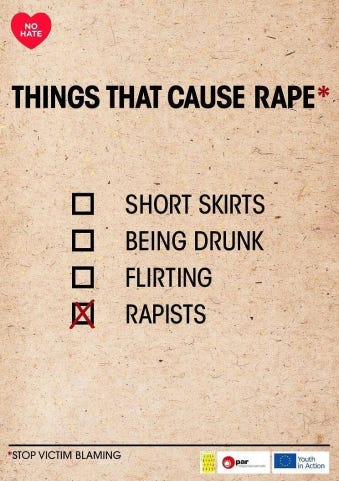
His words enabled white supremacists across the country – especially among the police and right-wing vigilantes – to justify their violence, where the vilest of the victim-blaming is reserved for POCs, most especially those whom they have murdered. From well before Trayvon Martin to beyond Jacob Blake, prosecutors, defense attorneys, judges and right-wing media habitually justify the fate of victims of police violence by dredging up negative but irrelevant details about their lives prior to the incident. “You are using his past to determine whether the officers were right,” Quinyetta McMillon, the mother of Alton Sterling, has said. “This has nothing to do with why he was gunned down.”
But in the minds of the 21st century Calvinists, such material, real or not, has everything to do with why cops pull triggers. And as this (or any) president’s popularity continues to drop in the polls, we shouldn’t be surprised to read sickening headlines such as Kenosha Police Chief Blames Protesters for Their Own Deaths, or First Man Shot By Kyle Rittenhouse In Kenosha Riot Was A Convicted Pedophile (to be clear, I’ve only seen this accusation in far-right websites, and to be even clearer, it doesn’t matter if it is true). Or this: Lawyers for ex-cops highlight George Floyd’s history of crime, drug use in court filings.

On the international level, writes Caitlin Johnstone, it may look something like this:
Step 1: Destroy nations and displace tens of millions of people.
Step 2: Wait for some of those people to hate you and want to fight back.
Step 3: Use their desire to fight back as justification to repeat Step 1.
Why are America’s foreign policies so consistently, stunningly brutal? Because we believe that our enemies (almost without exception people of color) deserve their fate. After the mass war crime known as the “Battle of Rumaila”, two days after the Gulf war ceasefire was declared, having ordered U.S. pilots to slaughter hundreds of retreating Iraqis, General Schwarzkopf defamed the victims by calling them “rapists, murderers, and thugs”.
Anthropologist David Graeber, generalizing from the schoolyard to the battlefield, explained how we justify the behavior of a bully:
Bullying creates a moral drama in which the manner of the victim’s reaction to an act of aggression can be used as retrospective justification for the original act of aggression itself.
Expect more of this as the (or any) election season intensifies. Republican re-election hopes depend on it. This is the American story and the American psyche – but not every American, not those whose mythologies have arisen out of this North American earth. Native Americans do not need courses in Depth Psychology to know how fragile such a personality is. If whites were to regard themselves from this perspective, they might well realize that America is a society primarily composed of – and led by – uninitiated men, as I describe in Chapter Five of my book. At the root of our national identity is the grief and rage of young men who have never been seen and blessed by their elders, who cover up their depression with masks of grandiosity, racial entitlement, easy violence and victim-blaming.
We white people insist that we are not the Other, and that we are good, pure and innocent. So whatever happens to the Other, whatever we inflict upon her, must be her own fault. But in our souls, we know very well that this is a 400-year-old projection, and that it really speaks of our own self-image. Perhaps the greatest tragedy of the whole American project is that, well below the surface of our egal-itarian ideals, our optimism, our heroic and macho posturing and our good intentions, most of us still believe this about ourselves.
But Father Gregory Boyle reminds Christians and all who think like them that there is another way:
There is one line that stopped me in my tracks: “And awe came upon everyone” (Acts 2:43-47)...the ultimate measure of health in any community might well reside in our ability to stand in awe at what folks have to carry rather than in judgment at how they carry it.