American Witch Hunt

Part One
The Lord doth terrible things amongst us, by lengthening the chain of the roaring lion in an extraordinary manner, so that the Devil is come down in great wrath. – Deodat Lawson, witch-hunter
…divide us those in darkness from the ones who walk in light… – Kurt Weill
In the fall of 2025, the witch hunters, crusaders, blacklisters and inquisitors have re-emerged from under their mythic rocks. Diplomats, federal judges, attorneys and generals have been fired for not being sufficiently subservient to the regime. Dozens of journalists, TV personalities, teachers, soldiers and firefighters have been fired for comments about Charlie Kirk’s murder, and a website collecting such names claims to have received 60,000 accusations. University presidents have been forced to resign for claims of antisemitism. Civil institutions, corporations and law firms, fearing the wrath of the government, have dropped their DEI programs. Federal officials are scrutinizing anti-war activists, especially anyone who has expressed opposition to the genocide in Gaza. A Zionist group has identified pro-Palestinian green-card holders for deportation, among the hundreds of thousands of other endangered immigrants, legal or otherwise.
Free speech and democratic institutions are under worse threats than at any time since the 1950s. The 1950s: it happened then, and before then, many times. To understand how deeply such inquisitions are embedded in the American psyche, we need to understand American mythology.
For nearly 400 years we have told ourselves that the ideal American personality is the rugged, individualistic, heroic figure of extreme masculinity; the self-reliant, “self-made man” who takes charge, defeats evil, saves the endangered maiden and redeems the innocent community. Until not very long ago, he was white, Anglo-Saxon and Protestant. Henry Kissinger described him(self) in the 1970s:
This cowboy doesn’t have to be courageous. All he needs is to be alone…he rides into the town and does everything by himself.
He lies deep in our American psyche, and to some extent we all share his one-pointed, confident and productive – but also pathologically violent and emotionally dissociated – nature.
And we all share his shadow. Our monotheistic, demythologized world (Joseph Campbell’s phrase) offers us few archetypal alternatives to the Hero. One is the Villain, who is merely his mirror opposite, another rugged individual who is perfectly evil rather than perfectly good (and a character we all secretly admire for his willingness to break the rules). The other alternative is the Loser, or the Victim. And the shadow of extreme individualism is extreme conformism.
When society undergoes periods of significant social change and people feel that avenues toward heroic victory – in socio-economic terms, “getting ahead” – have narrowed, the experience of victimization emerges in the individual mind. Similarly, the shadow of conformism emerges in the social mind or collective consciousness – in the form of witch-hunts. At such historic junctures, many societies, including America, have joined together to identify certain scapegoats – the Other – and eliminate them, with Biblical ferocity.
European fear and loathing of the Other stems from an ancient, paranoid imagination. The Old Testament repeatedly celebrates genocidal yet redemptive violence:
The righteous will be glad when they are avenged, when they bathe their feet in the blood of the wicked. – Psalm 58:10
Medieval art repeatedly depicts the Last Judgment with extremely detailed scenes of naked bodies subjected to (almost) inconceivable torture. The blessed, however, will enjoy these scenes. Saint Thomas Aquinas declared that in Heaven, “…a perfect view is granted them of the tortures of the damned.” Eighteenth-century evangelist Jonathan Edwards preached: “The sight of hell-torments will exalt the happiness of the saints forever.”
The paranoid imagination combines eternal vigilance, constant anxiety, obsessive voyeurism, creative sadism, contempt for the erotic, gratuitous cruelty and an impenetrable wall of innocence. We can find it at least as far back as Rome, where authorities claimed that Christians: “… burn with incestuous passions…with unspeakable lust they copulate in random unions…”
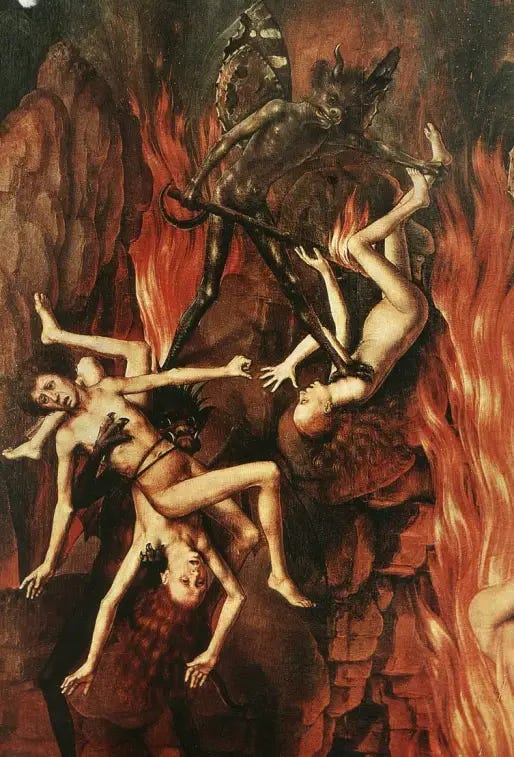
Witch-hunts and inquisitions are the Paranoid imagination’s traditional ways of erasing the threat of The Other from public awareness. They have the additional function of scaring hell out of the entire community, preventing further dissent or unacceptable thinking – and reducing the anxiety that arises during these periods of social change. Conformism does, after all, have its benefits.
The Catholic Inquisition arose quite early in European history. For centuries it produced a constant state of fear across the continent. After 1600, a Protestant version took strong root in America, and it periodically re-surfaces in epidemics of scapegoating. Inquisitions are often characterized by highly imaginative cruelty perpetrated for the good of the accused. Blaise Pascal wrote, “Men never do evil so fully and cheerfully as when we do it out of conscience.” This idea of “therapeutic coercion” can be traced back to St. Augustine, who wrote of “forcibly returning the heretics to the real banquet of the Lord.”
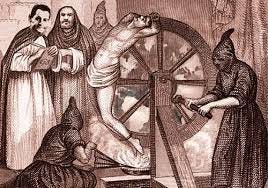
The Witch Craze reached its zenith during the anxiety-ridden fifteenth to seventeenth centuries, not, as commonly assumed, in the Middle Ages. Churchmen, Protestant as well as Catholic, found witches everywhere, claiming that they made pacts with the Devil, accepted eternal punishment in exchange for sensual gratification and ate children in a blasphemous parody of the Eucharist. Conservative estimates put those executed at 30,000. Others claim the figure is much higher. Most were poor, rural women who were accused, writes Riane Eisler, “…of being sexual; for in the eyes of the Church, all the witches’ power was ultimately derived from their ‘sinful’ female sexuality.”
The persecutions reached across the Atlantic, where Spain brought the Inquisition to the lands under its control. Not long after, English Puritans, searching for a land where they could have religious freedom (the light), very quickly enforced their own brand of strict conformism (the shadow).
The Puritans were Calvinists who believed in predestination, and they were obsessed with the constant presence of evil that threatened their innocent community. With mutual love within that community but expulsion (or much worse, including capital punishment) for dissenters, they evolved a paranoid style that continues to resurface. But another style quickly evolved that would become just as characteristic in North America: the predatory and unscrupulous characters who would happily take advantage of the hysterias. The predatory imagination, as opposed to the paranoid imagination, is based, quite simply, on an insatiable, shameless desire for power. Our continual working phrase in this examination of our American soul will be Cui Bono? (Who profits?) or Follow the money.
Depth Psychology reminds us to consider our unconscious motivations, where fear turns into its opposite. The mind often creates images of what it condemns as evil to see what it secretly desires. Since the Puritans saw cleanliness and propriety as external indications of a clean soul, their bodily needs continually them of their original, corrupt nature. Since they experienced constant fear – and fantasies – of pollution, they rigidly enforced moral standards, denouncing music, theater and dance and declaring capital punishment for adultery (for women, at least). Calvinism’s “most urgent task,” wrote sociologist Max Weber, was “the destruction of spontaneous, impulsive enjoyment.”
Although both salvation and perdition fell on the individual, the entire community might suffer for one person’s sins. So, each person was responsible for upholding group morality. Individual sin polluted, with consequences for all New England. Ministers addressed condemned criminals (and indirectly everyone else) with “execution sermons” such as this:
You must be cut off by a violent and dreadful death. For indeed the anger of the Lord would fall upon this whole Country where your sin hath been committed, if you should be suffered to live.
The Salem witch trials of 1692 (not the first witch craze in the colonies, which was in 1651) reveal how the Puritans dealt with the Other within the community. Witches could be anyone, anywhere, but were generally independent women accused of consorting with the Devil or with the natives who worshipped him. In this paranoid atmosphere some girls became “possessed” (as in Euripides’ Greek tragedy The Bacchae) and upset the order of careful self-control. They “named names” (as they would in 1918, 1950, 2001, 2015 and 2025) of others – overwhelmingly women – who had allegedly bewitched them.
When the inquisitors punished these scapegoats, it was critical that their executions be highly public affairs in which community attendance was mandatory, because such spectacles were intended not only to purify but also to intimidate the entire community.
These traditions of coerced conformity (as well as the frontier narratives in which the Hero saved the innocent community from evil) had already became well established in American literature – and, more importantly, in the American psyche – as early as the late seventeenth century.
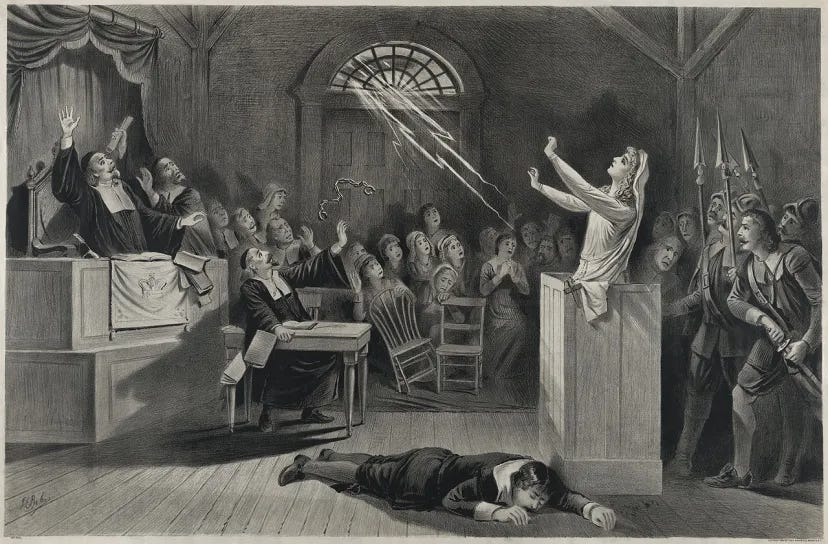
The paranoid imagination seeks itself: it constantly projects its fantasies outward onto the Other and then proceeds to demonize it. Therefore, it finds conspiracies everywhere. It needs to find conspiracies everywhere. I’m not speaking here of “conspiracy theories” in the current sense, but of deliberate manipulation of public narratives by community leaders – politicians and clergymen.
In 1798, ministers whipped up hysteria about a tiny Masonic group. Anticipating McCarthyism by 150 years, one of them ranted: “I have now in my possession...authenticated list of names.” That year the threat of war with France loomed and immigrants from France were viewed with suspicion. Accordingly, Congress passed four laws collectively known as the Alien and Sedition Acts that required foreigners to be residents for 14 years before becoming eligible for citizenship; authorized the deportation of dangerous aliens; and allowed the imprisonment and deportation of anyone who was the subject of an enemy power. For more on these issues, read two essays of mine:
Who is An American? A Timeline
White-on-Red or White-on-Black violence was not enough for some people. Barely two generations after the Revolution, the rapid pace of technological change, the huge increase in Catholic immigration and the growing conflict between ideals and reality erupted into white-on-white violence. Even as actual Native Americans east of the Mississippi were still defending their lands, self-described “Nativist” mobs engaged in widespread attacks against Irish Catholics that included murder and church-burnings. For some years, they controlled politics in several states. The constant theme was that all of America’s problems were caused by one or another “Other.” In 1835, 180 years before Trumpus (Trump = us), future President John Tyler blamed abolitionism on “a reptile who had crawled from some of the sinks of Europe to sow the seeds of discord among us.”
Since then, at least seven generations of us have absorbed these narratives. They – and the default mode of fear that they engender – live as deeply in us now as they ever did. We are still driven by these mythic furies. We have fretted over the intrusion of the Other in every generation: wild Indians, Black rapists, immigrants, “white slavers” drug-addled Mexicans, Japanese spies, communists and terrorists. “Islamophobia” and the new hysteria around “criminal immigrants” are merely the latest masks of The Other. And Depth Psychology teaches that the Other is us.
Part Two
Those who surrender freedom for security will not have, nor do they deserve, either one. – Benjamin Franklin
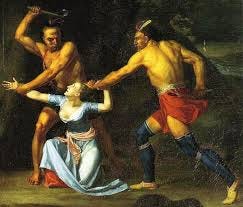
In a land where the dominant identity very early became bound up in racial purity, the ultimate terror has always been pollution of the pure, Anglo-Saxon blood. Hence the captivity narratives that became a primary literary theme decades before independence and have remained one of the nation’s core narratives up to the present, as we will see. For four centuries, the worst of all horrors was the mere possibility that a white woman had been intimate with her Native American captors.
Hence the “one-drop rule” that assumed that blacks were persons with any African ancestry. Well into the 20th century, several states defined “octoroons” – people who had seven white great-grandparents out of eight – as black, and this madness occurred only in America.
The light side of our national myth sings of pluralistic democracy, opportunity and the free competetion of ideas. But our shadow story is about paranoid crusades to stamp out any ideas that call the consensus reality, the dominant paradigm, into question. And the fear is always either about pollution of the pure bloodline – the intrusion of the Other from outside, or epidemic (“among the people”), the outbreak of the Other from within.
Theodore Roosevelt’s 1906 Presidential State of the Union Message blatantly charged, “…The greatest existing cause of lynching is the perpetration, especially by black men, of the hideous crime of rape – the most abominable in all the category of crimes, even worse than murder.”
Why did his audience understand that (alleged) rape (presumably of a white woman) by a black man was worse than murder? Do you remember John Wayne in 1954’s The Searchers (one of the most honored movies of all time) making the decision to kill his niece once he realizes that she has had sex with an Indian?
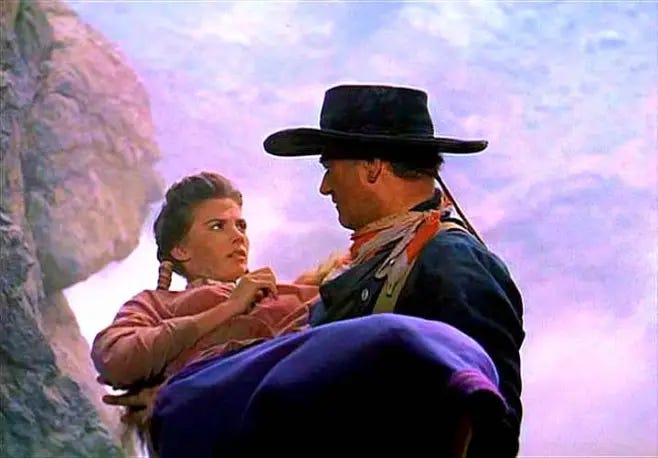
Since white women were the essence of purity, pollution by the bodily fluids of the Other was penetration through the veil of innocence. And such sins, “even worse than murder,” provoked the ultimate response, what is known today in the Middle East as “honor killing.”
TR’s successor, William Howard Taft, presided over the “white slavery” panic, in which young white women were allegedly abducted and sold into prostitution. He was followed by Woodrow Wilson, who showed Hollywood’s original “blockbuster” film in the White House in 1915. The Birth of a Nation reached its climax when black men (acted by whites in blackface) attempted to rape two white women. At the last minute, the Ku Klux Klan entered and prevented the heinous crime. Wilson, the first Southern president following the Civil War, had already re-segregated the federal government. He praised Birth: “It was like writing history with lightning, and my only regret is that it is all so terribly true.” KKK membership, lynchings and white-on-black riots soared after his endorsement.
Wilson was an equal-opportunity fear-monger. Earlier, as President of Princeton University, he had contrasted “the men of the sturdy stocks of the north” with “the more sordid and hopeless elements” of southern Europe, who had “neither skill nor quick intelligence.” Such statements influenced 27 states to pass eugenics laws to sterilize “undesirables.” A 1911 Carnegie Foundation “Report on the Best Practical Means for Cutting Off the Defective Germ-Plasm in the Human Population” recom-mended euthanasia of the mentally retarded in gas chambers.
Yes, you read that correctly.
This proved too controversial, but in 1927 the Supreme Court allowed coercive sterilization that ultimately affected 60,000 Americans. The last of these laws were not struck down until the 1970s. Meanwhile, in Mein Kampf, Hitler praised American eugenic ideology, and in the 1930s, Germany copied American racial and sterilization laws. Later, at the Nuremberg trials, the Nazis quoted Holmes in their own defense.
Public opinion was initially opposed to entering World War One. In 1917, although almost a third of Americans were either first or second-generation immigrants. To overcome the anti-war sentiment, the government passed espionage and sedition legislation that forbade the use of “disloyal” language about itself, the flag or the army. It criminalized dissent at any level and pursued a massive crusade, accusing those born in Germany and even American-born citizens of German descent of disloyalty.
The inquisition worked, but only because the government sent thousands of spokespersons across the country and mobilized the mass media and the new FBI to silence alternative opinions – and because Americans are always ready to hear that they are in danger of attack.
But this was only the beginning, and Germany, after all was a fellow capitalist nation. The real target was communism. The next witch-hunt came at war’s end, when the year 1919 saw 3,600 strikes involving over four million workers, as well as 26 white-on-black race riots. When bombs exploded outside the residences of lawmakers in several cities, the New York Times, without any proof, quickly blamed “Bolsheviks”. The Red Scare, America’s first anti-communist hysteria, enabled the government, in the infamous Palmer Raids, to arrest over ten thousand radicals and deport four thousand. Many were tortured and some were murdered.
The events of 1919-1920 reflected another period of social change and extreme anxiety that soon resulted in women achieving the right to vote. But it also saw alcohol prohibition and the resurrection of the Ku Klux Klan, which grew to 4–5 million, including 30,000 ministers, followed by the end of most immigration.
But class anger persisted. Capitalism desperately needed a diversion, a new external Other, and it found one with the birth of the Soviet Union. The New York Times blared, “Bolshevik assault on civilization… Menace to world by Reds…Reds seek war with America.” The U.S. and twelve other nations attacked Russia in an unsuccessful attempt to prevent consolidation of communist rule. Afterwards, compliant intellectuals inverted history (as I write in Old White Men: Historians as the Gatekeepers of American Myth, Part One of Eight); historian John Gaddis terms this invasion a “defensive” action.
With this new, external, red Other, right-wing conmen found a bottomless well of paranoia to exploit. In mythological terms, the Dionysian menace, once again seeping through the gates of the Apollonian city, was now presented as an international conspiracy to deprive Americans of their property, their women, their freedom and their dreams. Wherever workers organized for their rights, politicians, the media and the churches framed their actions as Soviet-inspired terrorism.
The language they used (and still use) is so revealing. Attorney General Palmer described radicals as “moral rats,” whose “sly and crafty eyes” revealed “cruelty, insanity and crime.” They had “sloping brows and misshapen features.” To Wilson, they were “apostle(s) of Lenin…of the night, of chaos, of disorder.” Compare this language to Trumpus: “rapists...shithole countries...animals...ISIS-affiliated ...eating our pets.”
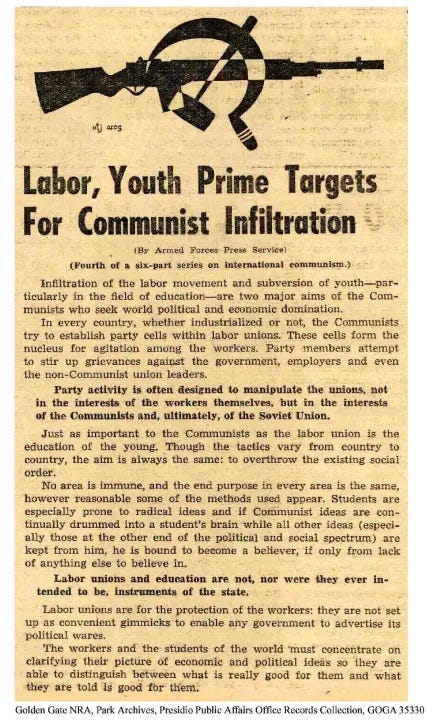
The first Red Scare ended quickly, having served its purpose: white America, where blacks were still being lynched and Native Americans could not vote, had repulsed the red hordes and was free. The innocent community remained pure.
But Satan himself was still out there, just beyond the gates. By now, one could well ask, could “America” exist without its Others? For several generations, daily anti-communist media propaganda pictured an immense evil that was not motivated by normal morality but dedicated to enslaving the world. And it was not only the religious and under-educated who succumbed to the hysteria. “This is how it looks to the simple folk of America,” writes Historian William Blum, “…the sophisticated, when probed slightly beneath the surface of their academic language, see it exactly the same way.”
Part Three
Keep watching the Sky. Stay vigilant against another attack. – The War of the Worlds, 1953
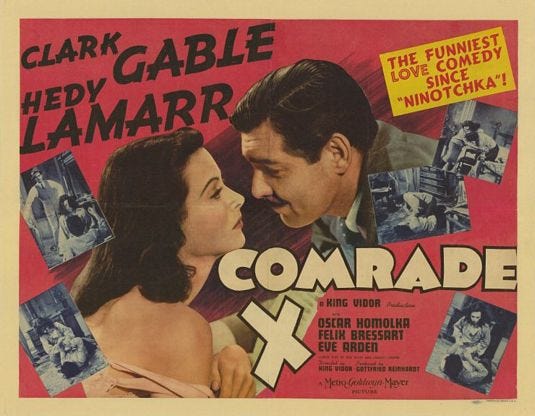
In the 1930s, Life Magazine published articles such as “The Trojan Horse Policy of Communism in America” and “If the Communists Seized America.” Hollywood helped demonize communists with Ninotchka, Comrade X and Red Salute; this continued into the cold war (The Iron Curtain, The Red Menace) and beyond (Invasion, U.S.A.). The only break was from 1942-1945, when the U.S. and the U.S.S.R. were hesitant partners against Germany. Then, Hollywood dutifully produced pro-Russian movies: Mission to Moscow and Song of Russia.
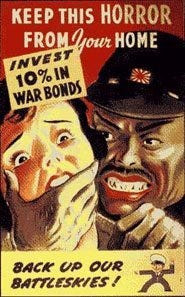
Forms change, but mythic narratives remain fundamentally the same. In 1938, when CBS Radio broadcast The War of the Worlds, millions panicked, believing that Martians had attacked. In truth, world war was approaching. Once again, the government required a new Other to overcome an entrenched sense of isolationism. And this required manipulating the old myths of Indian attack upon innocent Eden. America fought a race war in the Pacific. Mendacious posters of ape-like “Japs” raping white women helped mobilize bellicosity and led to a savagery by U.S. soldiers against the Japanese that they rarely exhibited against the Germans.
From the perspective of the capitalist power structure, however, the major threat to stability was not Nazi Germany; it was the USSR. Revisionist historians agree on three major points:
1 – Germany received massive financial aid from major segments of the American banking, oil and automotive industries (including Prescott Bush, father and grandfather of future presidents) before and during the war.
2 – The U.S. and Britain waited years to invade continental Europe, watching while Germany and Russia chewed each other up and Jews perished in the millions.
3 – Certain specific but horrific military acts, including the fire-bombing of Dresden and the atomic bombings in Japan, had no military value but were primarily symbolic statements intended for the Soviets.
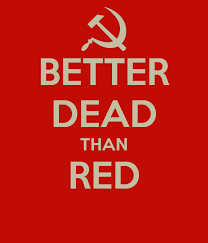
Indeed, it was the Nazis, capitalists at heart, who first used the slogan lieber tot als rot (”better dead than red”). Americans soon put it into common use as well. Again, we note a hyperbolic statement (we recall Theodore Roosevelt claiming that rape by a black man was worse than murder) rooted in the Puritan terror of pollution.
Imagine: hating an ideology so much that one would prefer death. Is it possible that the implications of communist takeover and enforced sharing of resources (“…to each according to their needs”) actually call into question all of the other assumptions of “Americanism” – perpetual growth, pathological masculinity, purity of blood, the privileges of imperialism disguised as the redeemer nation?
America, essentially undamaged by the war, was now the world’s strongest nation. However, it was only military spending that ended the depression. As in the 1890s, many argued that further economic expansion (investing surplus capital in foreign markets) would prevent unrest. This would require force and, for the first time, a permanent war economy. And this would mean re-invigorating the communist threat.
There is no other way to explain how America’s national celebration of the defeat of Nazism in 1945 turned to hysteria in a matter of months.
The range of acceptable discourse in our corporate media still frames the Cold War in terms of America’s heroic containment of “Soviet expansionism.” Containment: as in quarantining those who have been infected. Government documents, however, acknowledged that the primary threat was Europe’s “…refusal to subordinate their economies to…the West.”
Let’s take another detour through myth: the birth of the national security state coincided precisely with the peak popularity of western movies. Although Westerns had always been central to the movies, as late as 1959 they comprised a quarter of all prime-time network hours. Eleven of the top twenty-five shows were westerns. The Other – in these cases, the original red Other – was threat-ening American women as it had two hundred years before, and millions were watching this mythological enactment every night. But the Hero arrived just in time to dispose of the threat, just before the final commercial. Anxiety was reversed and innocence restored.
“The purpose of propaganda,” wrote psychologist Sam Keen in Faces of the Enemy, “is to paralyze thought, to prevent discrimination, and to condition individuals to act as a mass.”
America’s major institutions (government, media, universities and churches) universally colluded in building and maintaining the paranoia, and not for either the first or the last time. In demonizing communists, they utilized the mythic narratives that fifteen generations of Americans had already consumed. For more of my thoughts on the shadow side of American myth, see American Dualities.
Mere months after Hiroshima, Life depicted rockets raining down from the east and predicted mil-lions of dead. Advisors told President Truman in 1947 that to win approval for his foreign policy he would have to “scare hell out of the country.” His Attorney General warned: “They are everywhere – in factories, offices – and each carries with him the germs of death for society.” In 1950, FBI director J. Edgar Hoover declared that “Communists are today at work within the very gates of America.”
Propaganda films (known in the fifties as “newsreels”) portrayed Russia threatening Europe with its tentacles, or as a grapevine (the perfect image of Dionysus) spreading over the map. Week after week, they depicted a state of crisis, and with no opposing voices, reality for millions was what appeared onscreen. Politicians brayed, “Like apples in a barrel infected by one rotten one, the corruption of Greece would infect Iran…” and, “…this red tide… like some vile creeping thing… spreading its web westward…” Note the predictable language of pollution and infection and refer forward to Trumpus.
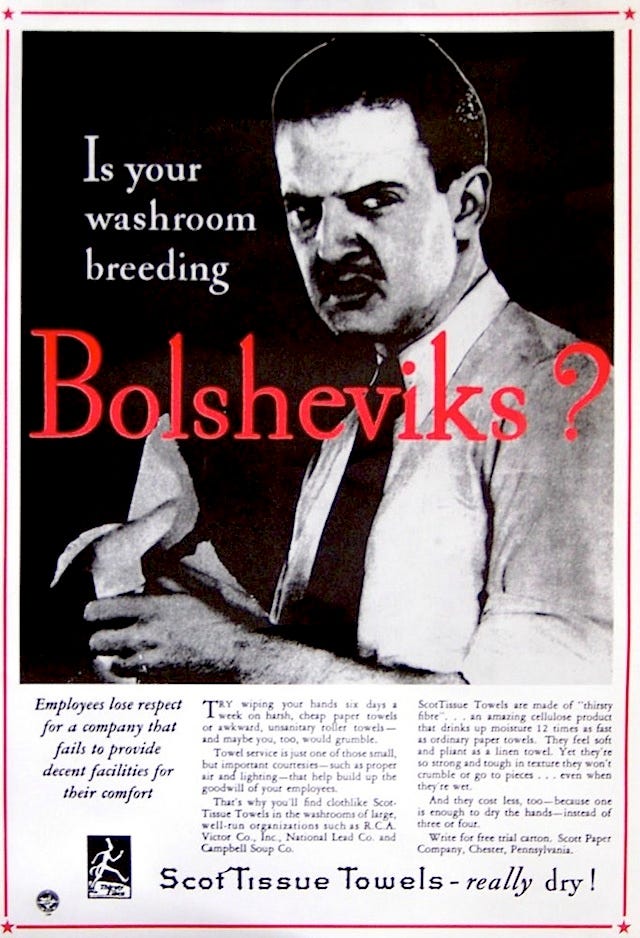
Americanism now had a “higher power” (the state), dogma (anticommunism), zealots (the F.B.I.), modes of excommunication (the Hollywood blacklist) and clergy. Billy Graham, the nation’s leading evangelist, declared that communism was “a religion inspired…by the Devil himself.” Religion: what other word can describe the all-encompassing force that anticommunism injected into American life, how the fear – as well as the sense of identity – spread? (And let us not forget how that same religiosity, once it lost its focus with the demise of the Soviet Union in the 1990s, would quickly discover a new Other, Muslim terrorism).
In this sense, 1950s Americanism can be called a negative ideology, of mere opposition to or fear of another way of thinking. Or we could call it a religion of denial, because it allowed nuclear bellicosity, neo-colonialism, de facto segregation and brutal police violence against people of color to coincide with the ideals of freedom and opportunity. Millions resolved this dilemma by accepting the unrelent-ing propaganda; to be American was to be anticommunist. “If Americans could only band together against the common red foe,” writes Joel Kovel, “they would know who they were.”
Terror of the external Other was also bound up with an internal issue, gender anxiety, as it is now. The press attacked feminists as neurotic, sexually frigid and (no surprise) communists. The 1948 Kinsey Report revealed a huge gap between public morality and private behavior. Suddenly, “deviants” were everywhere within the gates. Crusaders accused Truman of protecting a communist “homosexual underground.” Hoover asked, “How Safe Is Your Daughter?” In 1952, Eisenhower barred gays from federal jobs while businesses and local governments forced workers to swear to their “moral purity.”

Contagion and pollution are scientific terms, yet in our context, they have mythic potency. A half-century before the “Neo-Cons,” reactionaries were willing to say absolutely anything to amplify fear. From this point on, we can follow the predatory imagination to its logical extreme – doing whatever is necessary.
Part Four
Be afraid…be very afraid… – The Fly, 1986
The major media casually dismiss “conspiracy theories.” Indeed, the phrase itself demarcates the range of acceptable discourse; it is a verbal symbol of the walls of the polis. But we must at least acknowledge the sheer numbers of questionable political events that have occurred in the past sixty years: multiple political assassinations; Operations “Paper Clip” and “Northwoods”; mind control experiments; the CIA’s two-decade-long “MK Ultra program”; mysterious plane crashes of political candidates and whistleblowers; Watergate; the “October Surprise” of 1980; the Iran-Contra scandal; allegations of CIA involvement in drug smuggling; the 9/11 attacks; the thefts of the 2000 and 2004 presidential elections; and the Epstein affair, not to mention several undeclared wars.
These events fit a tradition extending backwards, past Roosevelt’s provocation of and foreknowledge of Pearl Harbor, past the Palmer raids, the sinkings of the Lusitania and the Maine, provocation of the Mexican War and the Witch craze. The 1950s, however, saw a quantum leap in terror. America was producing leaders who would drastically heighten both the predatory and the paranoid imaginations.
We may never know how much of the Cold War hysteria – America’s second Red Scare – was deliberately created by reactionary elements in and out of government to demonize dissent and justify the permanent war economy. But we do know that the period included local and federal loyalty oaths; listings of over 150 suspicious organizations; the HUAC witch-hunt; the Hollywood blacklist; the Rosenberg trials and Joseph McCarthy’s wild accusations of treason in government. McCarthy never revealed the names on his famous list of “205 known communists” he claimed were working in the State Department. He didn’t have to; the damage – the terror – had been done.
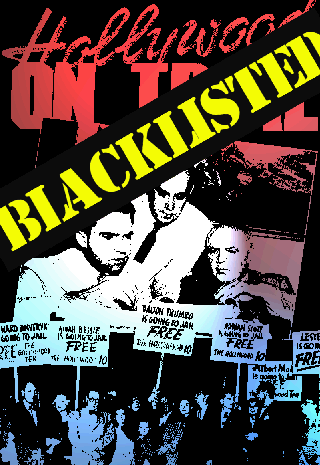
Reactionaries had their excuse to drastically increase funding to the internal security apparatus. The FBI, which doubled in size from 3,500 agents in 1946 to over 7,000 in 1952, intimidated unions, school boards and universities, where 600 instructors were fired. Three thousand government workers lost their jobs and 12,000 were forced to resign. Investigators used any methods available, including burglary and illegal wiretaps. The National Lawyers Guild’s defense of clients accused of being communists made it a particular target, and the FBI burgled its office at least fourteen times between 1947 and 1951.
As in the original Catholic Inquisition, most subjects of loyalty reviews were not allowed to cross-examine or even know the identities of those who accused them. Many were never told what they were accused of. But, as in Salem, one could save oneself by naming names. The hysteria was a sobering reminder of how thin a veil our modern temperament is, how mythic furies still drive our imagination, and how similar to our present time, when ICE agents veil their faces.
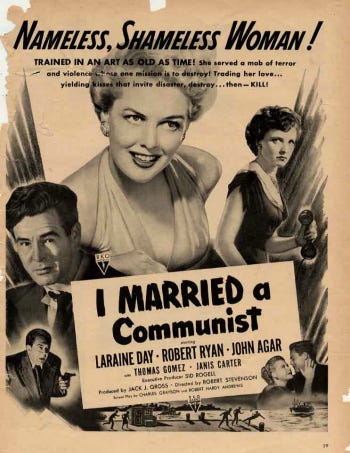
How did people cope? Just as they do now, millions managed to deny the hysteria by immersing themselves in consumer delights, vacuous sitcoms or paranoid narratives (Foreign Intrigue, I Spy, Passport to Danger, I Led Three Lives, The Day North America Is Attacked, Nightmare In Red, etc.) Subtler film allegories (Invaders from Mars, The Manchurian Candidate and Invasion of the Body Snatchers) expressed the fear – or fantasy – of pollution. The War of the Worlds ends by warning, “Keep watching the Sky. Stay vigilant against another attack.” In 1958 The Blob featured a shapeless, red jelly that, like Dionysus, seeped easily through doors and windows. People reported alien abductions, as they had reported Indian abductions two centuries earlier.
Later, Hollywood mythologized the C.I.A. with James Bond and his “license to kill”. Like the super-heroes, detectives, G-men, military and cowboys who had preceded him, his violence was exempt from all laws. His existence (real or fictional) belied our faith in democracy and spoke to a higher power, or story: regeneration through violence in the service of American innocence.
Complete trust was impossible. Whereas America’s “inner other” – the black man – hadn’t changed, the “outer other” had long before exchanged his red skin for a “red” ideology. This was no longer a race war, as World War Two in the Pacific had been. “They” could be anyone, anywhere: your neighbor or your cousin. The communist infection, like a microbe, was invisible.
The fear-mongers easily convinced the public to support undemocratic security measures that the government (as it would in 2001 and 2025) claimed were necessary. In 1954, 78% of Americans agreed that it was a good idea to report any neighbors they suspected of being Communists. Indeed, for a decade the red supplanted the black as both inner and outer Other. Later, however – much later – George Kennan, the architect of “containment,” admitted, “…there was not the slightest danger of a Soviet military attack.”
The reactionary slogan – My country, right or wrong – sums up how the old fears continued to motivate pro-war sentiment during the Viet Nam War, and how they fueled the white backlash against Civil Rights and feminism.
Part Five
If you’re submitting budget proposals for a law enforcement agency…you’re not going to submit the proposal that “We won the war on terror and everything’s great,” because…your budget’s gonna be cut in half...it’s my opposite of Jesse Jackson’s ‘Keep Hope Alive’: it’s ‘Keep Fear Alive.’ – former FBI assistant director Thomas Fuentes
In the era of constant electronic media, Ronald Reagan’s people mastered a new technique, the intermittent reinforcement of denial and fear. He calmly reassured whites that Eden was secure, and then he terrified them with prospects of imminent nuclear war. He described the USSR with inflated, demonizing rhetoric: evil empire, shadowy, fanatics, satanic and profane, and the corporate media complied. Long before Fox News, Time and Newsweek described Russians as savages, dupes, adventurers, despots and barbarians. Their methods were brutal, treacherous, conniving, unmanly, aggressive and animalistic. And this was the language of the respectable, “middle of the road”, “legacy” media, long before Fox News and internet trolls.
“Unmanly” yet “aggressive” – only the Prince of Darkness himself (or Dionysus) could be tarred with such contradictory projections. But we have seen that “othering” doesn’t have to be consistent. Any effective, demonizing narrative will do in the service of fearmongering. The nightmares just below the surface of the American dream had persisted in their fantasies of this red, external Other for seven decades. Now, when Reagan denounced Nicaraguans as Soviet proxies, no one in mainstream media pointed out that the U.S. had been invading Nicaragua since before there was a Soviet Union.
Despite its 12,000 nuclear warheads, America needed the “Star Wars” missile defense; the greatest power in history couldn’t protect itself from the barbarians outside without appealing to the high-tech gods. Nor could it solve the internal threat without building more prisons and establishing SWAT teams in every city, a process that would result in the militarization of policing and the incarceration of millions of black men.
But the Kennedy, King and Malcolm X assassinations and the legacy of Viet Nam left gaping cracks in the myth of American Innocence, and large majorities came to distrust both government and the military. The collapse of the Soviet Union was a stunning blow to the tradition of demonizing communists to divert anger at capitalism. Amid the worldwide euphoria, 60% of the public favored major cuts in defense (they still do) and a “peace dividend” that would eliminate poverty. This presented a huge threat to the militarists who for decades had received all the funding they’d requested. One general lamented, “The drug war is the only war we’ve got.”
George H.W. Bush sheered up those cracks with mendacious language about international terror, creating a new hysteria against a new, brown Other that has kept the pot boiling for another fifty years. After decades of invisible communists in our midst, perhaps it was reassuring to be able to readily identify the evil: terrorism. In terms of American myth, we read this is as racialized war. In terms of propaganda, it is sheer genius: war not against a nation or even an ideology, but against a form of behavior, a war that no one can ever declare victory over.
The Gulf War made international violence acceptable again, and post-Cold War pacifist euphoria quickly dissipated. Bush boasted, “Viet Nam has been buried forever in the desert sands.” Saddam Hussain, more valuable to the myth as the face of evil than as a puppet of the American empire, remained in power for another twelve years. One official candidly admitted, “Saddam…saved us from the peace dividend.” Osama bin Laden’s public story would follow the same trajectory.
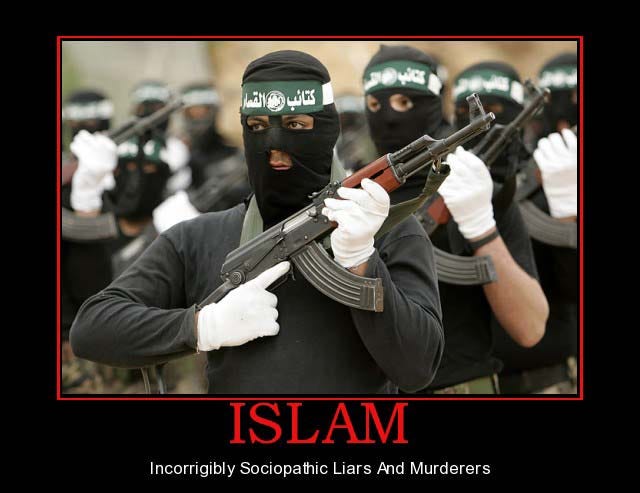
Hollywood was busy reframing the Viet Nam War as a tragedy of “good intentions”. It reconstituted the old hostage narratives with the Rambo series and revenge fantasies starring Clint Eastwood and Chuck Norris, macho heroes who ignored lawful restraints to destroy the Other. Now, sensing the opportunity to hit an easy but lucrative Muslim-hate target, Hollywood contributed Rules of Engagement, Iron Eagle, True Lies, The Siege, Delta Force, Harem, Executive Decision, Black Hawk Down and countless other films.
But the cracks in the myth continued to emerge, and so did the perceived need to unite Americans in the experience of shared fear. We have good reason to suspect that the right-wing intellectuals who wrote about the need for a “new Pearl Harbor” in the period preceding the 9-11 attacks were predicting the next terror event, the next witch-hunt and the next crusades to rid the world of evil.
What did the government know prior to the attacks? It doesn’t matter. This matters: on September 10th, George W. Bush was the least popular president in modern history. On the 12th, he was the most popular.
Do you remember those years, the blur of color-coded predictions of imminent danger, “nation-building” in Afghanistan and “duct tape security?” Do you remember pundits warning about “crack babies” and black youth “superpredators” who murdered for athletic shoes? Do you recall how government leaders lied every single day – and continue to do so – about the causes, goals and costs of their wars?
While two-thirds of the population believed (ten years later, one-third still would) that Saddam was responsible for 9-11, nearly half of Americans agreed that America had special protection from God. But just beneath the confidence and optimism was a tooth-grinding fear of the future. The cadaver-ous face of evil was waiting, just beyond, or possibly already within the walls. This was a new experience, claimed the pundits.
Or was it? Hadn’t Americans feared Indian attacks for three centuries? Hadn’t they been terrorized for eighty years by red hordes from the east? Hadn’t every president since Truman confronted a war economy that perpetuated itself on fear of the Other? Hadn’t politicians played the “race card” for two centuries? Hadn’t gun sales continued to rise even as crime rates were plummeting? Weren’t Americans already armed to the teeth?
Had they forgotten about “satanic abuse,” the “missile gap,” the “domino theory,” the “window of vulnerability” and the Evil Empire? Hadn’t fear of contracting AIDS ended the sexual revolution? Hadn’t they been stuffing themselves with anti-depressants, hormone replacements and potency drugs? Hadn’t fear of losing property, status, security, virility, youth, freedom – and innocence – always been at the core of the American experience? Hadn’t we bounced between denial and terror for our entire history? As Glen Greenwald wrote, For Terrorist Fearmongers, It’s Always the Scariest Time Ever.
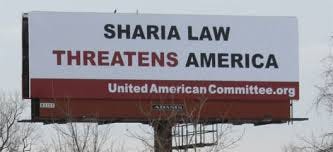
Bush II and Obama (in this context, Bush III) were much subtler than their predecessors in demonizing the new Other, employing the word “terrorists” as a euphemism but rarely using it to modify “Muslims” or “Islam.” They didn’t need to be as crude as Reagan, because Reagan didn’t have Fox News, Rush Limbaugh, a legion of racist televangelists or a Hollywood pumping out dozens of Islamophobic movies. Reagan didn’t have legions of Tea Party bigots whose hatred of immigrants pushed compliant politicians to introduce absurd anti-Sharia law legislation in 32 states, and all this long before Trumpus.
Just below our characteristic American sense of bright-eyed optimism and can-do pragmatism, our national shadow continued to gnaw at our souls, reminding us of the profound dissatisfaction at the root of our identity. Below that is an infinite well of unresolved grief for the centuries of slavery and genocide. Above it is an epidemic of anxiety. Forty million Americans will be impaired at some point as a direct result of an anxiety-related condition. Our first line of defense (or denial) is substance abuse. Nearly 17 million people, or 7.2 percent of adults, suffer from alcohol-use disorders.
But what about those “domestic terrorist” threats? Welcome to the self-fulfilling world of the inquisitors. Recall how the FBI burgled the offices of the National Lawyers Guild fourteen times. Since 9-11 this same agency has mastered the art of entrapment, repeatedly recruiting young, gullible, unstable Muslims. Then it plans and funds domestic terror plots and publicly praises itself for preventing them. Greenwald writes:
Multiple studies have found that nearly 50 percent of the federal counterterrorism convictions since 9/11/2001 resulted from informant-based cases. Almost 30% were sting operations… vulnerable individuals are targeted and manipulated not for any criminal acts they have committed but rather for the bad political views they have expressed…sending young people to prison for decades for “crimes” which even their sentencing judges acknowledge they never would have seriously considered, let alone committed, in the absence of FBI trickery.
The inquisitors become heroes in the media and receive increased funding, and the public emits a mass sigh of relief. But the anxiety remains: What if they aren’t able to stop the next plot?
We do, of course, have plenty of actual problems to worry about. Nearly half of U.S. households live on the edge of financial collapse with almost no savings or retirement assets. But in a broken political system, channels for expression of legitimate discontent have dried up or been directed into right-wing populism, which always hungers for a scapegoat to sacrifice. Since the end of World War Two, fear has allowed us to love our country, right or wrong, as the national security state has bombed over thirty countries. And it continues to allow the police to murder a Black man every twenty-eight hours.
Part Six
When they want you to buy something they will call you. When they want you to die for profit, they will let you know. – Wendell Berry
Cui Bono?
Far more elected Republicans than Democrats are graduates of business schools, where human motivation and brain science are taught, than of law schools. Trumpus, or at least the people who give him his marching orders, know their propaganda, in this case, the sly alternation between the opposing poles of Hero and Victim. For every time he utters a mendacious brag about some dubious accomplishment, he bewails the fact that he (and by extension, his supporters) have been victimized by liberals. And he’s been doing this for a long time: in 2019 it was reported that since becoming President for the first time, he had tweeted the words “witch hunt” nearly 300 times. I note this not just to bash him but to point out just how intentional much of his rhetoric is, just how much of a master of psychological projection he is, despite looking so consistently like a fool.
He (or his people) knows who he’s dealing with – the MAGA crowd he needs to manipulate, and the liberals who rush to demonize him to avoid acknowledging their own complicity.
Because our myths are inherently unstable, so is our American identity. Major changes in social conditions always call this identity into question, and this produces conscious or unconscious anxiety. I’ve shown how white Americans typically resolve this anxiety through of victim-blaming, demonizing, moral crusading and witch hunting. All these phenomena are attempts to revalidate our diminished sense of who we are by placing all blame for our troubles on convenient scapegoats – segregating them, harming them or (in the extreme) destroying them – and they are inherently conservative. They traditionally appeal, in other words, to reactionaries, racists and misogynists, or in current terms, to right-wingers, but they always serve the interests of the rich.
However, liberals also respond to the old mythic furies. Their belief in in freedom, equal rights, feminist values and compassionate government does not make them any less susceptible to the temptations of oppositional thinking, false equivalencies, demonizing and, in milder but self-defeating ways, witch hunting. Countless liberals and media pundits have willing settled for the easy solution of branding Trumpus as the source of all our ills, but without questioning the complicity of the “intelligence community” or the corporate behemoths – Big Pharma, the defense and medical industries and the Israel lobby – that fund the Democratic Party.
I don’t really care what you believe about the causes of the 9-11 attacks; or about who killed the Kennedys, Martin or Malcolm; or whether the election of 2020 was stolen; or whether we should continue to fund the Ukraine war, or whether Muammar Gaddafi, Saddam Hussain, trans teachers, Latino gardeners or Palestinian professors threaten you; or if you cross the street whenever you see a Black teenager approaching; or whether you will allow your children to play with unvaccinated kids. I do care if you take the bait every time the media offers you another new threat to worry about.
In 2013 it was whooping cough. In 2016 it was Zika and Ebola (with the additional threat of “Ebola-carrying illegal immigrant Latino terrorists!”), followed by swine flu, bird flu, mad cow disease (infection and madness!) and MERS (Middle East Respiratory Syndrome)? I do care that one result of the constant fearmongering was that by 2020, millions of people had become so skeptical of these narratives that they were willing to ignore an actual pandemic.
I care about whether you take the bait every time the media offers you another case of “Missing White Woman Syndrome.” We remember Polly Klaas, Chandra Levy and Jessica Lynch, the white woman captured during the Gulf War. But do we remember Shoshana Johnson, the black woman who was captured along with her? I care and hope that you understand that these stories, true or not, selectively manipulate the 350-year American legacy of captivity narratives.
I care that we begin to understand the real infection, the heritage of Othering, the need to project our darkness upon the scapegoat-of-the-moment, to automatically react with abject hysteria to every new threat that “national security” experts, Zionist bots and pharmaceutical lobbyists throw at us. I care about our tendency to ridicule friends as “conspiracy theorists” simply because they hold alternative opinions that have not been sanctified by the high priests of thought control.
Please don’t think that I am simply criticizing conservatives. That’s way too easy, and it serves no purpose but to entertain the choir. Still, throughout our history, the hysterias have indeed mobilized the right wing, including those men (and not a few women) who identify as white rather than as working class.
Or at least until these times. It began with the fluoridation dispute in the 1950s, picked up intensity with the JFK assassination and blossomed after 9-11. Many people with progressive values on almost all issues discovered that others with whom they disagreed on most social and economic issues did in fact agree with them on these questions and also shared their concerns that not all vaccines were inherently safe. When others demonized those who articulated the new “conspiracy theories”, right-wingers were happy to welcome them. For more on this, see my essay “Breathing Together: QAnon and New Age Thinking.
This is, above all, a mythological issue. It’s no longer about right and wrong, and “left / right” completely lost its meaning in 2017 when more Democrats than Republicans approved of the CIA. The real divide is top / bottom, or between innocence and experience.
Look at the sarcastic language of the late-night talk show hosts. Look at how often they lump anyone who questions certain aspects of the dominant paradigm together with right-wing loonies. This is false equivalence. Ridicule, once a legitimate tool of the left, is now used by gatekeepers who may not be as “left” as the right would paint them.
When we use the language of the gatekeepers, we are using the same demonizing techniques. In the world of oppositional thinking and circular firing squads, either you agree with us on every issue or we can’t trust you on any issue. Change the terminology just a little, and we are back in the language of the American frontier, where you are either among the elect within the pale of the innocent community, or you represent the dark evil on the outside that is inscrutable: like George Bush, we just can’t understand why they hate us so.
And when did sarcasm or ridicule ever change anyone’s mind? Aren’t they just preaching to the choir? Don’t they simply reduce debate to low comedy? This is the language of Fox News; worse, they want you to sound shrill and intolerant. It makes their work that much easier. It assists in their broader intentions, to convince more and more of us to simply turn off to the cacophony of bitterness and ranting. From their perspective, decreased voting is always good.
By 2020, most progressive voices had got on the “ridicule the anti-vaxxers” train and bought the gate-keeper line that lumps much anti-corporate, anti-military dissent together with the Tea Party loonies who insisted that Barack Obama is an African-born, Muslim socialist under the broad umbrella of conspiracy theorists. False equivalencies.
The campaign succeeded; most progressives now view the vaccination dispute (and in 2025, anything whatsoever having to do with Robert F. Kennedy Jr) as just another left / right issue, so they no longer need to think about it. If they were experiencing anxiety over this issue (as we all do when our mythic thinking is called into question), now their anxiety has been reduced. But, again, the myth of American innocence is inherently unstable. Like any other ideology or addiction (alcoholism, consumerism, fundamentalism, Marxism, free market libertarianism, workaholism and our greatest addiction of all, fear), it provides very little nutrition for the soul and must be constantly fed.
We recall that in 1967, it was the CIA that coined and weaponized the phrase, “conspiracy theorist,” and only when it perceived the need to marginalize those progressives who questioned the official assassination stories. This is the same CIA that created Air America, the Phoenix Program, the Nicaraguan Contras and military coups in literally dozens of countries – and still perpetuates the bogus “Russiagate” narrative that exonerated the Democrats from any responsibility for losing the 2016 election. By 2017 it was deeply unsettling to see so many good-hearted people praising these murderers simply because they appeared to be challenging Trumpus.
Can we at least agree that for our entire history we Americans have been particularly susceptible to hysterias and witch-hunts? That we have always been willing to suspend our sacred individualism and give our identity over to spokespersons of centralized control in the hope that we might push away the nightmares that they themselves have created? That it is only our manipulated fear of the Other that can still distract us from far more important issues?
Consider the gatekeeping phrase “anti-vaxxers”, not to re-open the argument but only to note that 99% of the money and 100% of mainstream media are on one side of the issue – Cui bono? – the side that spends tens of billions on TV commercials and inundates every family physician in the country with both propaganda and financial incentives.
Let’s try to avoid ideological absolutes. That is a language to which I am trying to offer an alternative, the language of mythological thinking. I am not talking about compromise. I’m trying to move from a world of “two” (polar opposites, right or wrong) to a world of “three” – holding the tension of those opposites, resisting the temptation to resolve it until something greater – a third element – appears. This is the essence of the Creative Imagination.
But I can’t avoid this one: there is simply no political conflict in which progressives should find themselves aligned so consistently, so indisputably, so innocently with the interests of Big Business, and indeed with the most corrupt of them all, Big Pharma. It’s possible – who knows? – that Kennedy is completely wrong about vaccines. But that doesn’t mean that the drug companies haven’t been lying about them for 75 years.
This left-wing demonization may well be one of the greatest scams of all. They’ve convinced good-hearted but naïve liberals to shill for them, on a very slippery slope. They’ve turned some us into FOX wannabes, more and more comfortable with their nasty, divisive, abusive language.
When we use their language, we are no longer accessing our creative imagination, but our paranoid imagination.
We are in a realm of fake news and very questionable social media “fact checkers.” These new gatekeepers (some of which are funded by the State Department) parrot the mainstream media and marginalize many progressive voices by lumping them together with gun-toting conspiracists in false equivalencies.
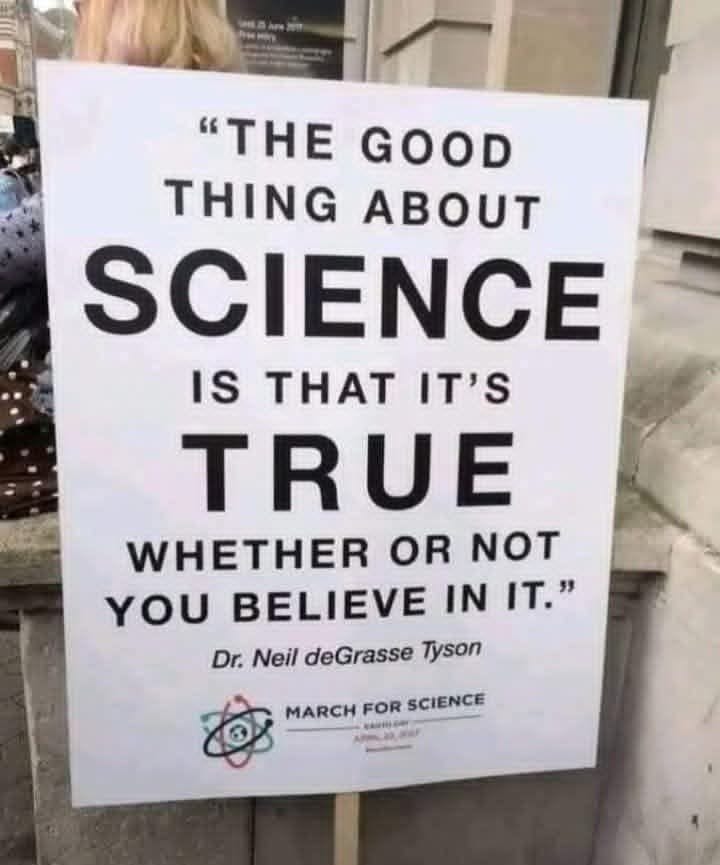
Science, actually, is a method of inquiry, not a belief system.
In a world less mad than this one, I wouldn’t have to point this out: I know many people who question the dominant narrative that would mandate vaccines for everyone, and they are all progressives who have nothing in common with right-wing conspiracists. Very few of them are against all vaccines. They simply don’t trust Big Pharma, and they all agree that this issue is not about being anti-science; it’s about the corruption of science under capitalism. This is very significant; for more, read here:
On money in science:
How Corporate Money Has Distorted American Science
Pharma Spent $6 Billion on Lobbying Politicians in the Last 20 Years
Why Does the FDA Get Nearly Half Its Funding From the Companies It Regulates?
Lobbyists Spent Nearly $3.5 Billion in 2020 to Influence Federal Lawmakers
Retraction Watch: 20,000 retractions
Drug companies donated millions to California lawmakers before vaccine debate
Big Pharma Wrote 10,000 Checks Worth $9 Million to Help Elect State Politicians in 2020
How Pesticide Companies Corrupted the EPA and Poisoned America
Corporate Funding at Public Universities Is Corrupting the Sciences
CDC director resigns after being caught buying ‘Big Tobacco’ and vaccine maker Merck stock
Senator Paid $400,000 By Pharma Pushes Mandatory Vaccine Law
On the unreliability of much science:
Why we can’t trust academic journals to tell the scientific truth
Academic Journals Are a Lucrative Scam
20% of Health Research Is Fraudulent
EPA Whistleblowers Say Managers Bullied Them to Approve Dangerous Chemicals
Lies, Damned Lies, and Medical Science
Study: half of the studies you read about in the news are wrong
The present hysteria (whatever it is as you read this) will end soon, because they all do. They have to, because they run out of steam and require new material. This is about our characteristic American predisposition to fall from confident exceptionalism into fear and then into crusades. It’s not about the fear-du-jour; it’s about our willingness to go there.
And in America, it’s easy to recycle those materials. When I originally posted this essay in 2020, right-wing operatives were flooding the internet with bogus “news articles” about “Antifa hordes” descending upon small towns all across the country. In 2025, as I post this updated version, Trumpus is blaming Charlie Kirk’s murder on Antifa and promising to punish any of its “supporters”, including plenty of mildly liberal foundations. Do you find this laughable? Try driving an hour in any direction away from the city you live in and asking random people about this. In Berkeley – Berkeley! – the University of California just gave Trumpus the names of 160 students and professors who have criticized the genocide in Gaza as part of a federal investigation into “campus antisemitism”, most without being apprised of the allegations against them.
The next hysteria is already in the pipeline, and those who will profit from it expect to count on us. When they sound the call to join the witch-hunt, will we have our pitchforks and torches ready? Will we be able to save ourselves (as at Salem, as in the first Red scare, as during McCarthyism) by naming names?